EDIT

MS Finance (MSF)

MS FINANCE

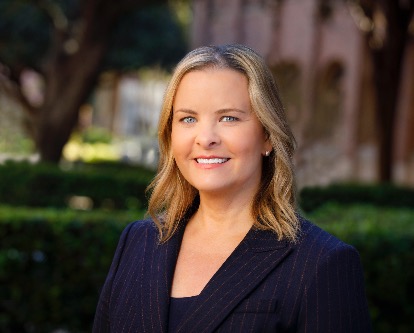
  • A smiling graduate student from USC Marshall on campus.
    Active Learning + Applied Skills

    Launch Your Finance Career in Just 16 Months

    The USC Marshall Master of Science in Finance (MSF) is designed to prepare you for the opportunities and challenges of modern finance. In just 16 months, you’ll gain rigorous technical expertise, real-world experience, and access to one of the most powerful alumni networks in the world.

    Our STEM-designated program gives you the skills and connections to succeed in investment banking, asset management, fintech, venture capital, and beyond.

Who Is a Good Fit for This Program?

What You'll Learn & Experience

MSF AT A GLANCE

Why Choose the MS Finance Program?

Career Outcomes + Support

  • A Master's in Finance Opens Doors

    Investment Banking & Advisory, Asset & Wealth Management, Corporate Finance, Private Equity & Financial Data Analytics, Real Estate Finance & Investment

  • Top Employers

    AllianceBernstein, Bain & Co., BCG, Citigroup, Deutsche Bank, Goldman Sachs, Guggenheim Partners, McKinsey & Company, PayPal, PIMCO, Raymond James, Tesla, Wells Fargo, Houlihan Lokey, JPMorgan Chase

CURRICULUM

The MSF curriculum is designed to be completed in 16 months over three terms (Fall, Spring, Fall), providing students with a comprehensive and flexible finance education. The 36-unit curriculum includes 19.5 units of core coursework and 16.5 units of electives, combining foundational finance principles with opportunities to tailor the program to individual interests and career goals. Students also have the summer term between academic years to pursue finance internships, gain hands-on industry experience, and apply their classroom learning in a professional setting.


Required Core Courses (19.5 units)

Throughout the program, students build a strong foundation in finance, economics, and accounting while developing expertise in investment analysis, portfolio management, financial analysis, and valuation. Core courses foster a close-knit cohort, helping students build lasting professional relationships and a strong finance network.

  • FBE 506: Quantitative Methods in Finance

    Units 3

    Fall Term 1

    The development of single and bivariate mathematical and statistical methods used in modern finance and economics and applications of these methods.

  • GSBA 510: Accounting Concepts and Financial Reporting

    Units 3

    Fall Term 1

    Information systems for public reporting and for management decision-making; theory of asset and income measurement; interpretation and uses of accounting data and financial statements; analysis of cases.

  • GSBA 511: Microeconomics for Management

    Units 3

    Fall Term 1

    Microeconomic theory with business applications; consumer demand, production theory, cost theory and market theory; decision making within the firm under different market and regulatory environments.

  • GSBA 542: Communication for Management

    Units 1.5

    Fall Term 1

    Internal and external communication, research methods, reports for decision-making, oral presentations and briefing, strategies to assure communication; field studies.

  • GSBA 548: Corporate Finance

    Units 3

    Fall Term 1

    Modern theory of corporate investment and financing decisions.

  • FBE 529: Financial Analysis and Valuation

    Units 3

    Spring Term 2

    An applications-oriented course to develop the financial and accounting tools required to do financial planning valuation and assessment of financial performance.

  • FBE 555: Investment Analysis and Portfolio Management

    Units 3

    Spring Term 2

    Analysis and management of common stocks and fixed income securities; development of modern portfolio theory and the efficient market hypothesis; organization of securities markets.

Challenge exams are available for the following core courses: GSBA 510, GSBA 511, and GSBA 548.

Students who pass a challenge exam may waive the corresponding core course, reducing the total program requirement from 36 to 33 units and decreasing the Fall Term 1 course load from 13.5 to 10.5 units. Any additional approved course waivers must be replaced with elective coursework to maintain a minimum of 33 units.

Elective Course Offerings (16.5 units)

Students can personalize their academic experience by selecting from a broad range of electives, including data science, strategy, mergers and acquisitions, venture capital and private equity, hedge fund investing, fixed income securities, real estate finance, and more. Elective courses bring together students from Marshall's MBA and other graduate programs, creating opportunities to collaborate across disciplines, broaden perspectives, and expand professional networks.

MS FINANCE FACULTY

NEWS + ANALYSIS

STAY CONNECTED

  • CONTACT US

    University of Southern California
    Marshall School of Business
    Popovich Hall, Suite 308
    Los Angeles, CA 90089-2633

    Phone: 213-740-7846

    Contact Us