EDIT

The Andrew Tavakoli Center for Real Estate

  • Los Angeles Skyline
    Real World — Right Now

    The Andrew Tavakoli Center for Real Estate

    Student-Focused, Applied Research for the Real World

    The Tavakoli Center for Real Estate is a student-first hub for applied research, industry engagement, and classroom excellence. Our mission is to train the next generation of real estate professionals by giving students hands-on experience with the tools, data, and decision-making frameworks used in practice while producing research and insights that remain grounded in market realities.

Integrated Pillars

We organize our work around three integrated pillars: (1) Classroom, (2) Data & Research, and (3) Networking. These pillars are designed to allow students to move seamlessly from learning concepts, to building reproducible analytics, to presenting ideas and meeting the professionals who shape the industry.

  • Our classroom experience is designed to mirror the work students will conduct as real estate professionals. Students learn by doing:

    - Deal and market fundamentals: offering memoranda (OM) literacy, rent roll and T-12 interpretation, underwriting logic, and investment committee-style thinking.

    - Core modeling skills: Excel-based cash flow modeling, financing and amortization mechanics, and scenario analysis.

    - Applied sector focus: with particular emphasis on commercial, retail, industrial, and multifamily contexts—always tied back to real assets and real market questions.

    The objective is straightforward: students leave with a portfolio of practical competencies that translate immediately to the workplace.

3 Distinct Pathways

At USC Marshall, studying real estate means learning to think like an investor, a developer, and a city-builder at the same time. You do not just study properties, spreadsheets, or zoning in isolation. You learn how capital markets, design decisions, law, policy, and neighborhood dynamics all come together to shape the built environment and create long-term value.

The USC Marshall Advantage

  • Practitioner Insight

    A major advantage of studying real estate at Marshall is access to practitioner insight. Alongside top faculty, students learn from instructors and speakers with direct industry experience who bring current deal structures, market realities, and career perspective into the classroom. That practitioner presence helps students connect theory to execution, build stronger professional judgment, and develop industry-relevant networks before graduation.

  • Experiential Learning

    Marshall’s real estate curriculum is especially strong in experiential learning. Courses like Real Estate Finance and Investment, Real Estate Analysis and Computer Modeling, Management of Real Estate Development, REIT Analysis, and Real Estate Capital Markets push students to work through real scenarios, defend recommendations, and make decisions with incomplete information, just like in professional practice. Students graduate with hands-on skills that translate directly into internships and full-time roles.

Program Leaders

Board Members

Alex Blecksmith
Mark Bolour
Jill Brooks-Garnett
Jeff Chiate
Rohit Dand
Nancy De Liban
Yvonne Fisher
Mike Flaherty
Paul Giorgio
Jenny Haeg
Drew Hoeven
Chris Jackson
Jeffrey Kaplan
Miguel Koenig
Mark McGranahan
Terry McGrath
Jim Parks
Max Rosendin
Paul Schumacher
Jeffrey Sheh
Stephen Siri
Andrew Tavakoli
Marco Vartanian
Chris Warmuth
John Wong

Real Estate Courses

  • FBE 391: Real Estate Finance and Investments

    FBE 391 is a hands-on course that builds the core skills behind real estate decision-making. Grounded in modern finance theory, the first half focuses on investment analysis at the property level, including market context, risk and return, valuation, and cash-flow pro formas; the second half moves into leverage, after-tax valuation, mortgages, underwriting, and an introduction to real estate capital markets. Students also develop practical modeling capability, including basic cash-flow modeling in ARGUS Enterprise.


  • FBE 466: Management of Real Estate Development

    Using real-world case studies and a full development feasibility framework, the course trains students to integrate market analysis, design thinking, and finance across capital stack structuring, debt/equity modeling, and underwriting in multifamily and retail contexts. The course is strongly experiential: students work on industry-style deliverables including in-class quizzes, two individual Investment Committee memos, and a team pitchbook presentation, while integrating data and analytics tools into classroom decision-making (including Argus, ArcGIS, and market-analysis/data-science modules).

Research & Data

  • People sitting around a table with a tablet in the middle showing data

    What Students Learn

    Students in the Tavakoli Center do more than study theory. They build a professional analyst toolkit that blends financial modeling, data analytics, market research, and modern AI-assisted workflows.

    They learn to:

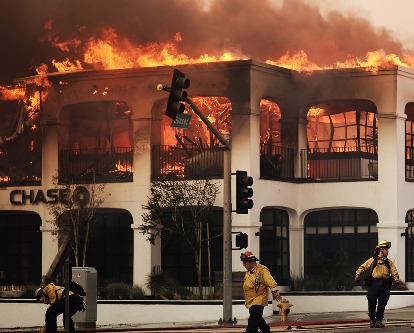
    • Work with real-world property, housing, demographic, hazard, and insurance datasets
    • Use AI and LLMs responsibly to accelerate research, summarize and compare documents, extract structured information, and support underwriting and market diligence
    • Connect quantitative analysis to real estate decisions across acquisitions, asset management, capital markets, development, brokerage, valuation, and proptech
    • Turn analysis into professional deliverables, including investment committee memos, market briefs, research notes, pitch materials, and presentations

CRE Launch Collaboration

CRE Launch Los Angeles Hosted At USC This Summer

The Tavakoli Center for Real Estate is partnering with CRE Launch to host the Los Angeles Campus at USC this summer—bringing a nationally recognized, industry-led training program to Southern California with a strong local network and in-person cohort experience.

This collaboration fits the Tavakoli Center’s mission by offering student-first, career-relevant training that bridges classroom learning and industry expectations—paired with networking and exposure to real professionals in the Los Angeles market.

DATA-DRIVEN INSIGHTS

INSIGHT + ANALYSIS

NEWS + EVENTS

Stay Connected