Why AI Influencers Work Better with a Human Friend
New research led by USC Marshall’s Luca Cascio Rizzo finds that showing an AI influencer interacting with a real person makes it seem more human — and more trustworthy, engaging, and persuasive.
Tech Fluency
ETHICS OF TECHNOLOGY
Why AI Influencers Work Better with a Human Friend
New research led by USC Marshall’s Luca Cascio Rizzo finds that showing an AI influencer interacting with a real person makes it seem more human — and more trustworthy, engaging, and persuasive.
New AI Essentials Courses Give Students Three Perspectives on AI
A new three-course initiative from USC Marshall, Dornsife, and Viterbi gives undergraduates complementary perspectives on artificial intelligence: how it works, how to use it, and what it means for humanity.
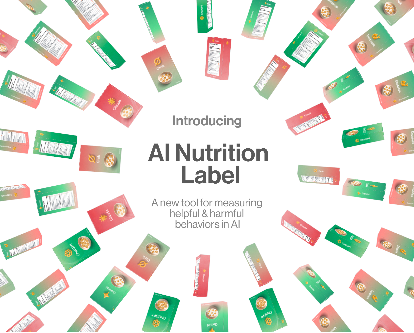
What If AI Came With a Nutrition Label? A New Framework Measures AI’s Impact on Human Wellbeing
Researchers launch AI Nutrition Labels to reveal how leading AI models shape wellbeing across psychological, physical, and social dimensions.
What Makes a Product ‘Cool’?
Research from USC Marshall decodes how a product becomes “cool” — and why the qualities that work in Ohio may flop in Shanghai.
Neely Center Addresses Harmful Technology Design at Mexico’s Presidential Morning Conference
As Mexico weighs new approaches to protecting children and adolescents online, USC Marshall’s Neely Center is bringing research on technology design into the national conversation.
USC Marshall Appoints Kimon Drakopoulos to Lead Schoolwide AI Strategy
New leadership role will shape USC Marshall’s AI strategy across education, research, and industry as AI transforms the future of business.
USC FRONTIERS OF COMPUTING
INSTITUTES + CENTERS
“COVID, supply chain challenges, and geopolitical uncertainty have driven risk management to the forefront of decision making at the highest levels of organizations."
— Kristen Jaconi, Executive Director, Arkley Institute for Risk Management
"As we develop the next generation of AI, we need to get better at objectively evaluating the benefits and harms of technology in our lives."
— Nathanael Fast, Director, Neely Center for Ethical Leadership and Decision Making
“Blockchain is a transformational technology that will have seismic implications on the global economy. The VanEck Digital Assets Initiative will provide our students with the education, skill sets, and support network to lead this paradigm shift.”
— James Healy, Adjunct Professor of Blockchain and FinTech, VanEck Digital Assets Initiative
"Awareness of and interest in the global supply chain has grown tremendously in the past 10 years, and the Kendrick Institute has been at the forefront.”
— Nick Vyas, Executive Director, Kendrick Global Supply Chain Institute
NEWS + EVENTS
USC Marshall Appoints Kimon Drakopoulos to Lead Schoolwide AI Strategy
New leadership role will shape USC Marshall’s AI strategy across education, research, and industry as AI transforms the future of business.
VEDA Enters a New Chapter with Appointment of Professor Lan Luo as Director
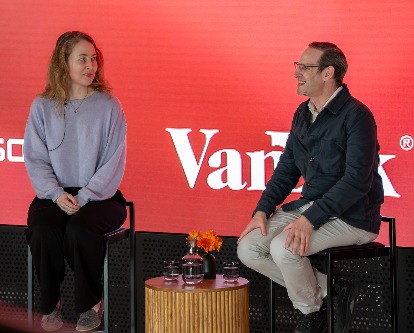
As blockchain technology matures from a niche experiment into a foundational layer of the global economy, USC Marshall’s VanEck Digital Assets Initiative is positioning itself at the forefront of what comes next.
USC Leventhal Hosts 44th Annual SEC and Financial Reporting Conference
The yearly conference brought together regulation leaders for discussions on emerging trends, including the implementation of AI throughout the sector.
2026 VanEck Blockchain Conference Highlights Student Opportunity in a Shifting Tech Landscape
As the future of blockchain continues to evolve, industry experts say the technology will transform multiple industries and encourage students to forge their own paths.
Marshall Faculty Present New Insights in AI, Banking, and Management at 2026 Research Fair
The 2026 Marshall Research Fair spanned a wide array of subjects, including AI bias and the origins of banks.
INSIGHT + ANALYSIS
Cited: Angela Zhou in USA Today
Zhou explains that AI-driven algorithms often used to set prices can also do so without understanding the context or without human marketing judgment.
Interview: Charlie Hannigan on CBS News
Hannigan discusses fears over artificial intelligence's rapid development and explains why technology companies and the federal government must be aligned to ensure its safety.
Quoted: Arianna Uhalde in the LA Times
Although higher ticket prices may rankle fans, Uhalde explains why passionate fans will continue to show up to games.
Quoted: Larry Harris in Inc.
Harris explains that new equity exchanges tend to rely heavily on dealer support and can further fragment trading.
Quoted: Larry Harris in CNBC
Harris explains why he doubts there’s been malfeasance in JPMorgan, Schwab, and UBS’s handling of President Trump’s investment portfolio.