Quoted: Shon Hiatt in The Washington Times
Hiatt explains how a new bill before Iran's parliament would bar certain vessels from passing through the Strait of Hormuz, including United States cargo ships.
When Bad Luck Isn’t Random: Understanding ‘Zemblanity’
New research explores how human agency, from mindset to choices, can shape how people and systems create opportunities or preventable misfortune.
[iStock Photo]
In 2025, Associate Professor Christian Busch’s Palisades home burned down in one of the most destructive wildfires in Los Angeles history. Busch says the disaster wasn’t blind bad luck, it was a clear case of “zemblanity,” which he defines as a patterned and preventable form of misfortune built into the way a system, organization or individual operates.
“There is this whole system that was set up for failure: lack of water in hydrants, lack of pre-deployment of fire trucks despite warnings, lack of coordination, brush not cleared,” Busch said. “You only realize in hindsight there were a lot of things that were actually set up for failure.”
Busch’s research explores how human and organizational choices can create misfortune through repeated choices, ignored warning signs, and patterns that quietly embed fragility. These vulnerabilities can compound into what appears to be bad luck.
“There’s a certain active choice [that creates active bad luck],” Busch explained. “Sometimes it is about missing those warning signals, but a lot of times it’s also just doing the wrong thing over and over and over and over again.”
In his recent TED Talk, Busch emphasizes that zemblanity is not merely blind bad luck. It’s the result of human agency and faulty decision-making embedding fragility into systems, organizations, and personal habits.
He gives the example of an elderly man who refuses to use his walking stick, despite instructions from his doctor. When the man falls down the stairs one day, he may blame it on other factors, such as ill-placed shoes, but in truth, he’s generated his own bad luck through his repeated choices.
Oversights leading to catastrophic outcomes can also occur on larger organizational levels. In his research, the associate professor examines how optimizing for the wrong priorities can set up a company for long-term failure.
As an example, he points to Boeing, the aircraft manufacturer that faced intense scrutiny for safety failures that resulted in two fatal crashes in 2018 and 2019. Public investigations pointed to a combination of design failures, production pressure, communication breakdowns, and oversight failure.
“[Boeing] used to be this amazing engineering-driven company, and they were world-class,” Busch explained. “The zemblanity lesson is what can happen when organizations optimize so intensely for efficiency, cost, and speed that they weaken the very capabilities that made them excellent in the first place, like safety in this case.”
According to Busch, this flawed decision-making process is spreading in the modern world.
“Zemblanity is on the rise because today’s systems are increasingly interconnected, meaning that small flaws can have far-reaching effects,” Busch wrote in an article. “They are more optimised, stripping away slack and redundancy in the name of efficiency. And they operate in a world of heightened volatility, with climate shocks, AI-driven interdependencies and geopolitical disruptions becoming the norm. When efficiency outpaces resilience, even tiny cracks can trigger massive breakdowns.”
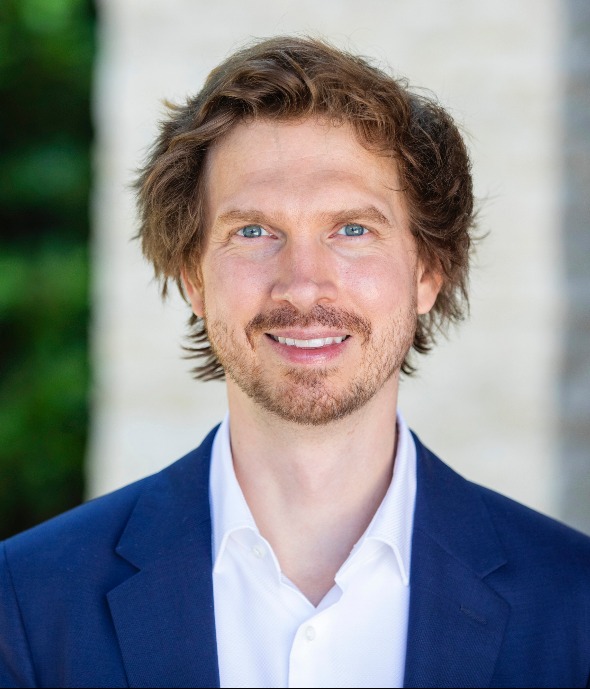
When efficiency outpaces resilience, even tiny cracks can trigger massive breakdowns.
— Christian Busch
Associate Professor of Management and Organization
Organizations and individuals can take proactive steps to reduce the risk of zemblanity. Before catastrophe strikes, Busch suggests they map where human agency produces negative value, such as near-disasters and tight margins. They can also “interrogate hidden interdependencies” by imagining a theoretical system breakdown and tracing back which overlooked flaws might produce such a breakdown.
Busch says organizations can also reverse zemblanity by cultivating an environment in which employees tackle obstacles by innovating and creating their own good luck, the subject of his book, The Serendipity Mindset.
“[Organizations] can convert vulnerability into opportunity by tuning systems, organisations or minds to surface positive surprises: encouraging cross-boundary connections, rewarding curiosity and preserving slack time for discovery,” Busch wrote. “This shift not only reduces the likelihood of costly failures, it expands an organisation’s capacity for serendipity, the positive twin of zemblanity.”
Busch carries these lessons into his classroom, where he teaches students to spot weak signals, build resilience, and create the conditions for good luck under uncertainty. As artificial intelligence and globalization rapidly shift the professional landscape, the associate professor encourages his students to prepare for unexpected events and design their own good luck through ingenuity and connections.
“If you look at the history of the world, you will see that there were always disruptions,” Busch observed. “There were always [shifts] that felt completely overwhelming, but they were also the reason why people build resilience, why they became stronger in the process.”
Life may not be a straight line, Busch says, but its twists and turns provide opportunities that students might’ve never discovered, otherwise.
RELATED
Quoted: Shon Hiatt in The Washington Times
Hiatt explains how a new bill before Iran's parliament would bar certain vessels from passing through the Strait of Hormuz, including United States cargo ships.
USC Marshall’s Next Chapter: A Conversation with Interim Dean Andy Call
In this Q&A, Dean Call shares his key priorities and the importance of community in shaping Marshall’s future.
USC Marshall Launches Product Management Minor
Designed for students from all undergraduate majors, the minor centers on identifying market needs, managing teams, and developing new products.
USC Marshall Alumna Named to 2026 Forbes World’s Most Influential CMOs List
Zoom CMO and USC Marshall MBA graduate Kimberly Storin has built her career by embracing new challenges and taking risks.
Quoted: Shon Hiatt in The Washington Post
Amid high gas prices, Hiatt describes how the oil markets assumed the war in Iran would have ended much earlier.