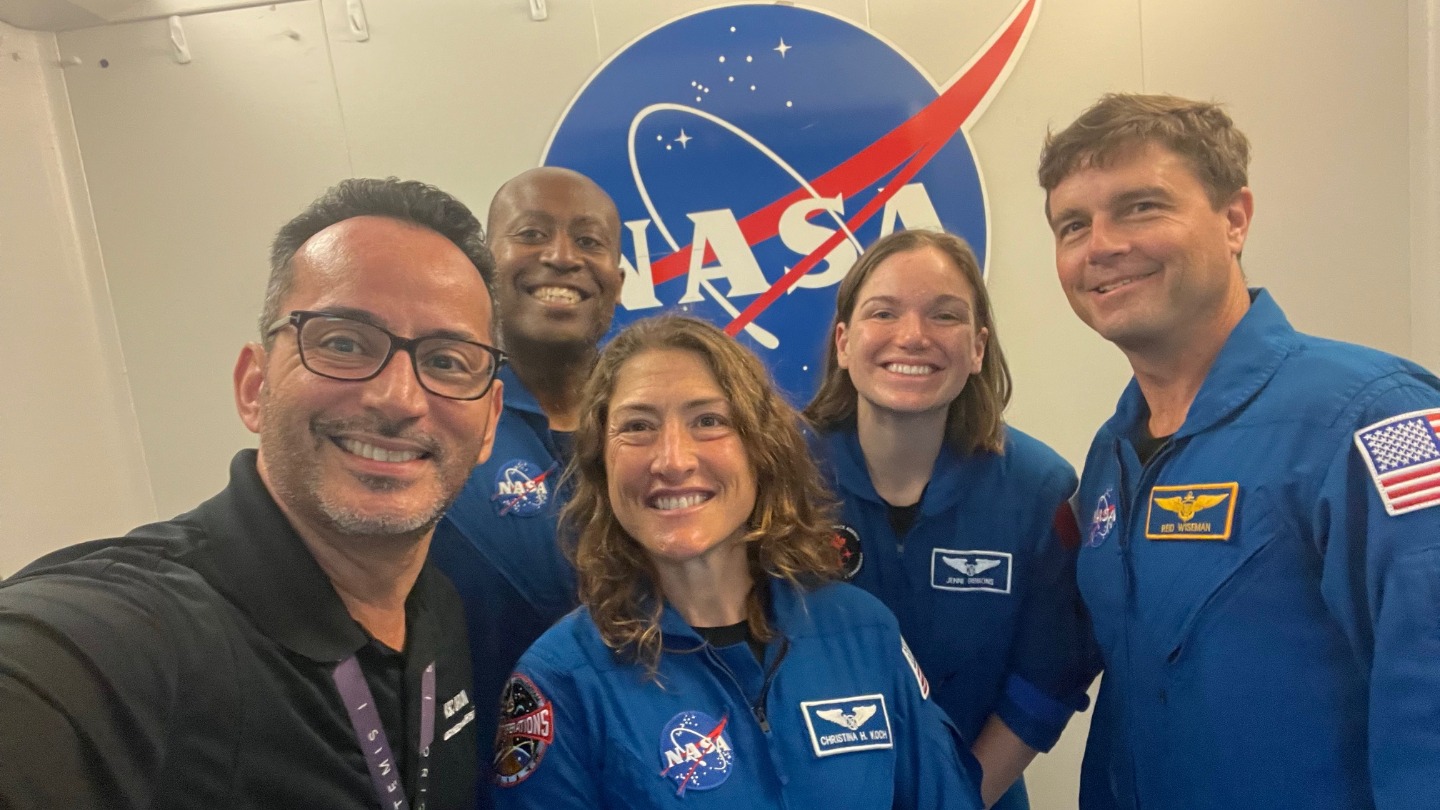
Like the master diver, Gonzalez has a military background, serving as a helicopter squadron support specialist in the Marine Corps for five years. Although the veteran’s service and ensuing experience at Raytheon provided him a robust technical background, the veteran wanted to develop his leadership skills as well.
He discovered USC Marshall’s MBV degree, and in just one year, Gonzalez says the program changed the trajectory of his career.
“MBV helped me shift into thinking more strategically and positioning myself for leadership,” Gonzalez said. “That alone made a big difference in how I presented myself professionally, and it helped me secure a role with Lockheed Martin, which ultimately set off a chain of events that led to me working on the Orion program.”
According to Gonzalez, his education pushed him to success long after graduation. In fact, he believes he regularly used his MBV experience while working on the Artemis II capsule and managing his team.
“MBV helped me communicate more effectively, think strategically, and understand how to align teams toward a common goal,” Gonzalez said. “I wasn’t just looking at technical problems anymore, I was looking at risk, impact, and the bigger picture. It helped me grow from being an engineer into someone responsible for people, performance, and mission success.”
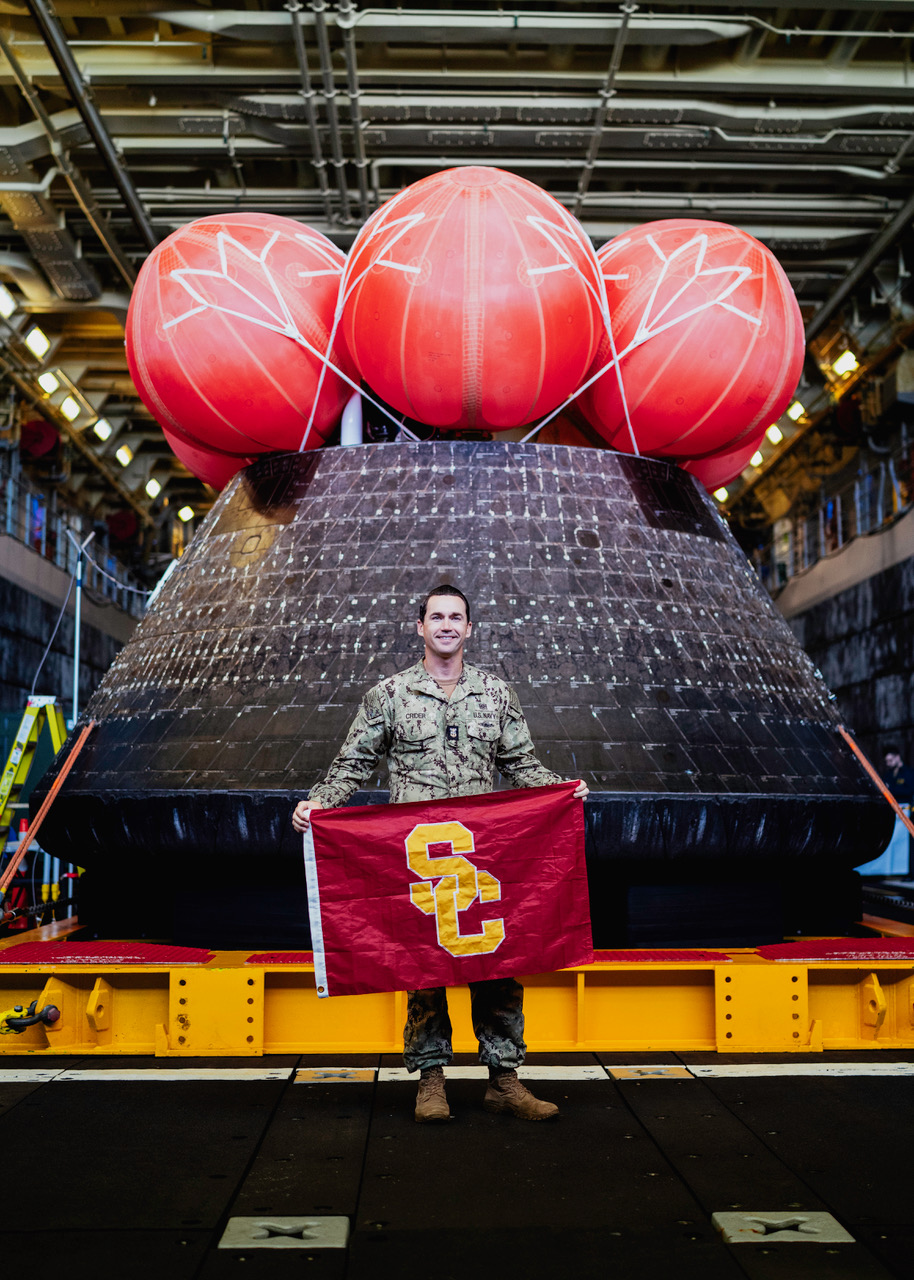
Unlike Gonzalez, Crider says he had extensive leadership training but lacked the technical acumen. Planning his retirement from the Navy, he searched for a way to translate his service experience to the civilian world, while building a community like the one he experienced in the service. When a senior officer described the connective power of the Trojan Family, the master diver was sold on USC Marshall.
“As a Navy Diver, we rely on each other whether we’ve known each other for five minutes or 50 years,” Crider said. “I knew I wanted to be part of a community that helped each other out, believed in each other, and did everything they could to ensure one another’s success — because that’s what I’ve grown up with.”
While the master diver initially chose the EMBA program to learn the business strategies needed to flourish in the private sector, he never could have anticipated how often he’d apply management learnings to his role in the Navy.
“When I went through dive school, I was pushed to my physical limits so that when times got hard, we all knew we could rely on one another and we wouldn't lose our cool. The EMBA program has been very similar,” Crider said. “It has pushed me academically and shown me that I can handle more stress than I originally anticipated.”
Although they played different roles in the operation, both Trojans consider Artemis II the closing of a significant chapter, both personally and professionally. For Gonzalez, it’s the fulfillment of a childhood dream. He remembers growing up in a low-income environment in Puerto Rico, where NASA felt as far away as Artemis II’s orbit.
“As a kid, I had a picture of the space shuttle Columbia on my wall, and I used to fall asleep looking at it,” Gonzalez recalled. “Back then, working for NASA felt impossible.”
For Crider, it’s the perfect close to a long and distinguished naval career.
“My career is coming to a close, and the next group of Navy Divers is going to step up for the missions ahead. But I am so incredibly proud to have been part of this one,” Crider said. “I’ve made lifelong friends during this chapter of my life, and I wouldn’t change any of it for the world.”