
Do Startup Accelerators Benefit All Founders Equally?
New research suggests accelerators help on average, but returns depend on founders’ prior experience and program design.
Pacenote Improves Access to Nursing Home Care in Japan
Through Pacenote, Tomohiro Nojiri MBA ’16 is helping families find nursing home beds and services in real-time.
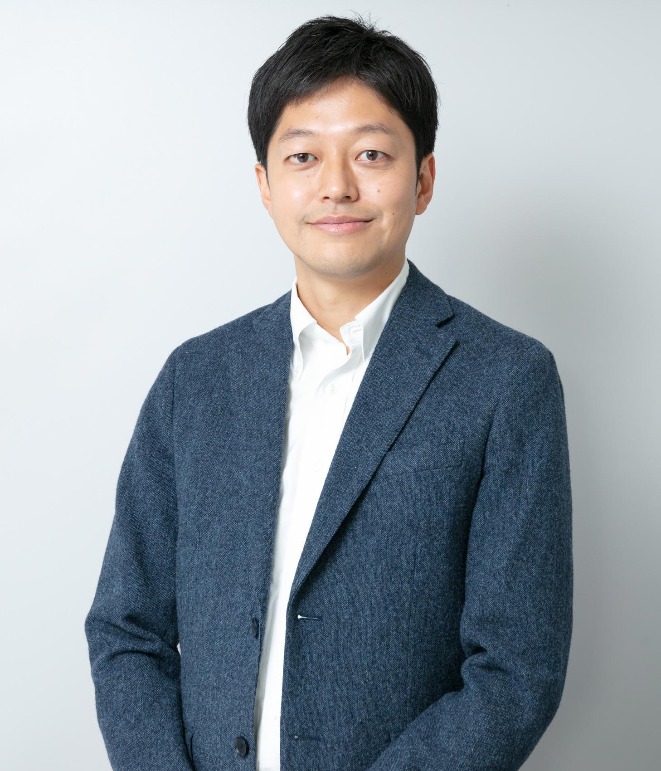
Tomohiro Nojiri MBA ’16, Co-founder of Pacenote
When Tomohiro Nojiri enrolled in USC Marshall’s Full-Time MBA (FTMBA) program, he didn’t know specifically how he’d use his degree, but he did know one thing: He wanted to help his community. Three years after graduation and inspired by the confidence he gained at Marshall, Nojiri followed through on his goal and co-founded Pacenote, a Japan-based healthcare company revolutionizing nursing home services through technology.
Pacenote uses digitization to create a more efficient bed management system, making it easier for people to find care and for nursing homes to provide it.
“Our system digitizes bed management, visualizing availability in real-time for over 200 facilities. We help families find care before they become lost,” Nojiri said. “This is not just digital transformation; it is a challenge to create a sustainable infrastructure that preserves human dignity.”
At USC Marshall, Nojiri found a network as passionate about community impact as he was. Summing up his MBA experience, Nojiri recalls advice offered by Carl Voigt, academic director for international business education and research.
“Carl Voigt always said to me: ‘Business people change the world.’” Nojiri recalled. “That mindset and the passionate environment led me to found Pacenote.”
For the Pacenote founder, his professor’s distinction between business and government impact hit close to home. Prior to Marshall, Nojiri worked for the Japanese government’s Ministry of Economy, Trade, and Industry (METI). His department assisted with rebuilding infrastructure following the Fukushima nuclear disaster, an incident that displaced over 164,000 people.
Nojiri saw firsthand the government struggle to make progress in the recovery even as private companies delivered essential supplies to the evacuation zone with speed and efficiency.
“I realized that private sector execution and speed are the [most] important key to sustaining the social infrastructure, especially in the Asian population environment,” Nojiri said. “That inspiration led me to the USC Marshall Business School.”
Nojiri admits, however, that he expected a purely quantitative approach at Marshall, but faculty consistently pushed him to apply lessons to real life, driving home the human component of every business decision. In one example, When traveled to Cuba with Marshall’s International Experiential Corporate Learning Program (ExCEL). In Havana, Voigt guided them through firsthand lessons on macroeconomics, regulations, and the evolution of industry.
Carl Voigt always said to me: ‘Business people change the world.’ That mindset and the passionate environment led me to found Pacenote.
— Tomohiro Nojiri MBA ’16
Co-founder, Pacenote
“Through macroeconomics and our trip to Cuba, [Professor Voigt] taught me the “qualitative” — that history, culture, and human emotion dictate business success,” Nojiri reflected. “I learned that true sustainability requires not just systems, but human connection.”
In 2019, Nojiri reunited with a former colleague who had taken over his family’s nursing home business. Up until this point, Nojiri says much of Japan’s nursing home bed management was conducted by pencil and paper, resulting in issues with record-keeping, efficiency, and disorganization. As a result, many beds went unfilled — a critical issue for Japan’s rapidly aging population. The pair agreed that Japan’s senior care industry was due for an upgrade and co-founded Pacenote. Their goal was to use technology to reduce the “information gap” that kept sick people from empty beds.
Nojiri’s passion for his work comes from personal tragedy suffered long before the founding of Pacenote. When his mother was hospitalized, a lack of coordination made it extremely difficult to get her the proper care in time, and she passed away.
“As a student, I had zero knowledge of the healthcare system and was powerless to find the right facility,” Nojiri recalled. “I realized later that this tragedy was a system failure caused by an ‘information gap.’ That helpless feeling became the quiet engine driving my career.”
Now, Nojiri works to provide timely care and prevent others from feeling the same loss.
“I realized that bridging the ‘information gap’ is the only way to achieve this sustainability and prevent the tragedy I experienced with my mother,” Nojiri said. “I want to build a society where necessary services reliably reach those in need.”
Looking back, the MBA alumnus credits USC Marshall for its emphasis on entrepreneurial mindset and societal impact. In fact, Nojiri says he uses these lessons everyday in his personal life.
“I really loved Marshall’s contribution to society … We went to the local elementary school and taught economics lessons to the elementary school students,” Nojiri said. “That also inspired me to contribute to the local people.”
For the remainder of his career, Nojiri hopes to use the human-first lessons learned at Marshall and exemplified at Pacenote to revitalize an industry and support families in need of care.
“Turning past pain into future hope — that is the score I want to achieve in my life,” Nojiri said.
RELATED
Do Startup Accelerators Benefit All Founders Equally?
New research suggests accelerators help on average, but returns depend on founders’ prior experience and program design.
Quoted: Michael Mische in ABC7
Mische explains that California regulation could make oil prices soar to $8 by the end of 2026.
Quoted: Shon Hiatt in AP News
With looming concerns over the Iran conflict’s effect on oil prices, Hiatt explains how California’s energy security issues place the state is an especially precarious situation.
Quoted: Georgios Petropoulos in Global News
Petropoulos explains how recent AI-fueled layoffs could inspire innovation in startups eager to hire the out-of-work talent.
MBA Alum Turns Silver Hair into a Beauty Brand
Drawing on the academic rigor and technical expertise she gained at Marshall, MBA graduate Evelyn Wang ’03 founded Silverist to support people with natural gray or silver hair.