
- Prospective Students
- Undergraduate Programs
- MBA Programs
- Graduate Accounting Programs
- Specialized Masters Programs
- Executive Education
- Certificate Programs
- PhD Program
- Faculty & Research
- Academic Units
- Centers of Excellence
- Faculty Directory
- Mentoring Resources
- Alumni & Friends
- News and Events
- Alumni Online
- Alumni Groups
- Marshall Partners
- Support Marshall
- Contact Us
- Corporate Connections
- Engagement Opportunities
- Corporate Advisory Board
- Recruit and Hire
- News Room
- Featured Stories
- Upcoming Events
- Faculty in the News
- Marshall News
- About Marshall
- Home
- Faculty & Research
- Faculty Directory
- Morgan McCall
Faculty Profiles
Faculty Profiles
Faculty Finder
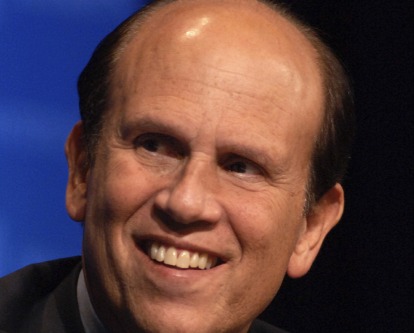
Morgan McCallProfessor of Management and OrganizationUSC Marshall School of Business
Los Angeles, CA 90089-0808Phone:213-740-0746Education:PhD, Cornell University; BS, Yale UniversityOverview
The assessment, development, and derailment of executive talent is the focus of Morgan's research and writing. Winner of the "Distinguished Professional Contributions Award" from the Society for Industrial and Organizational Psychology and the Marion Gislason award for "Leadership in Executive Development" from The Executive Development Roundtable at Boston University, his authored or co-authored books include the trilogy on developing executive talent, The Lessons of Experience ("New Perspectives on Executive Leadership Award"), High Flyers (Athena Award for Excellence in Mentoring), and Developing Global Executives. "Developing the Expert Leader," co-authored with George Hollenbeck, received the Human Resource Planning Society's Walker Award.

Morgan is on the editorial boards of Leadership Quarterly and Industrial and Organizational Psychology, and was as an expert judge in Fortune's ranking of the "Top Companies for Leaders" in North America. He is a Fellow of the Society for Industrial and Organizational Psychology.
Research
The experience conundrum • 2010Getting development out of the little box at the end of the form • 2009Four Common Innovation Mistakes • 2008Developing the Expert Leader • 2008The derailment conspiracy: when talented people derail • 2008Getting Leadership Development Right • 2007Getting leader development right: competence not competencies • 2007Leadership competency models • 2006Eight myths about developing global executives • 2006Taking the lead on innovation • 2004Leadership development through experience • 2004Competence, not competencies: Making global executive development work • 2003Global fatalities: When international executives detail • 2002Developing global executives: the lessons of international experience • 2002Advances in Global Leadership • 2001What makes a successful global executive • 2001Getting the right stuff in the right place at the right time • 2000Leadership Development: Contemporary Practices • 1999High Flyers: Developing the next generation of leaders • 1998Early identification of international executive potential • 1997"Leading Change: Overcoming the ideology of comfort and the tyranny of custom" by James O'Toole • 1995Identifying leadership potential in future international executives • 1995Early identification of global executives: Where to place your bets • 1994Identifying leadership potential in future international executives: Developing a concept • 1994When bad bosses happen to good people • 1993Organizing for the future: The new logic for managing complex organizations • 1993Developing Leadership • 1993Executive development as a business strategy • 1992Why do physician managers fail (Part 1) • 1990Why Physician Managers Fail (Part 2) • 1990Why physician managers fail (Part 1) • 1990"The Executive Effect: Concepts and Methods for Studying Top Managers" by D.C. Hambrick (ed.) • 1990Research methods in service of discovery • 1990Captains outrageous • 1989Great leaps in career development • 1989Leadership: The secrets of management success • 1989"Real Managers" by F. Luthans, R.M. Hodgetts, and S.A. Rosenkrantz • 1988Developing executives through work experiences • 1988The lessons of experience: How successful executives develop on the job (Issues in Organization and Management Series) • 1988"Bosses" by J. Wall • 1987Key Events in Executives' Lives • 1987"Leadership and Performance Beyond Expectations by B.M. Bass • 1986Picking Up Cues From the Boss • 1984The Intolerable Boss • 1984What makes a top executive? • 1983Great truths may not be...Management homilies: Do they stand up under examination? • 1983Leadership and the Professional • 1983Looking Glass Inc: University edition • 1983"Stogdill's Handbook of Leadership" by B.M. Bass • 1982Leaders on line: Observations from a simulation of managerial work • 1982Using simulation for research: Through the looking glass • 1982The (partially) mythical gap between research and practice • 1981Conjecturing about creative leaders • 1980The troubled waters of leadership research (Review of "Crosscurrents in Leadership" by J. Hunt and L. Larson) • 1980Power, authority, and influence • 1979A sort of programmed learning "how to do it" for managers (Review of "How to Develop Dynamic Leadership" by M.V. Fiore and P.S. Strauss) • 1978Leadership • 1978Leadership: Where else can we go? • 1978Where else can we go? • 1978Leaders and leadership: Of substance and shadow • 1977Making sense with nonsense: Helping frames of reference clash • 1977Of leadership and mythology • 1976High school students' perceptions of work • 1976Beware! Schemers disguised as leaders are after your castle! (Review of "Leadership Development: Theory and Practice" edited by R.N. Cassess and R.L. Heichberger • 1976Leadership research: Choosing gods and devils on the run • 1976Learning now what we thought we knew then (Review of "The Social Psychology of Work" by M. Argyle) • 1976Leadership is a ten letter word • 1975Can Leadership be Taught? Observations from the Field - RSS
University of Southern California Marshall School of Business | Copyright 2001 - 2013 | Privacy Policy