Former Navy SEAL Flourishes in Telecom Industry
After serving his country in the Navy SEALS, Chris Sambar MBA ’02 used his graduate education at USC Marshall to find success in a new profession.
Why AI Influencers Work Better with a Human Friend
New research led by USC Marshall’s Luca Cascio Rizzo finds that showing an AI influencer interacting with a real person makes it seem more human — and more trustworthy, engaging, and persuasive.
[iStock Photo]
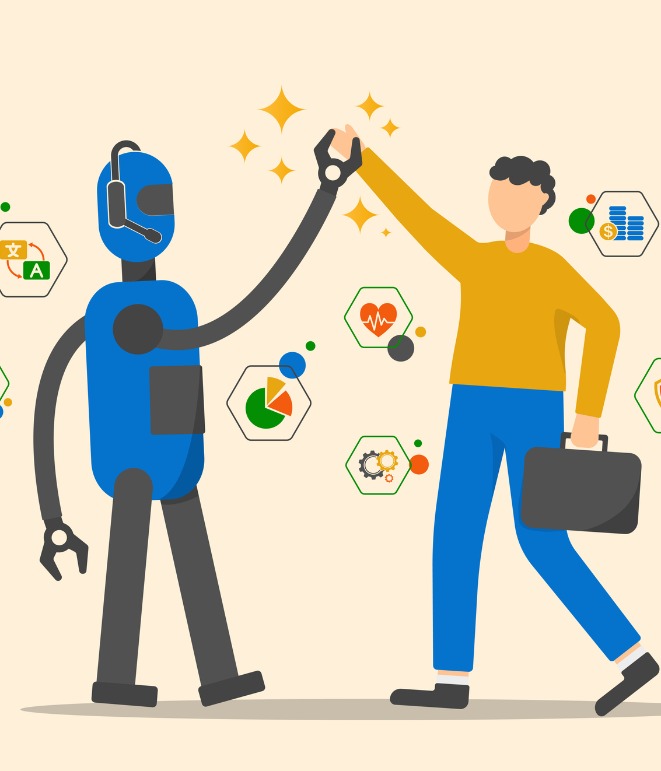
Scroll through Instagram long enough and you’ll meet an influencer who isn’t real. AI influencers — computer-generated personalities like Lil Miquela, who has millions of followers and has posted for Prada, Samsung, and Dior — look and act like human creators, but they’re entirely synthetic. Brands like them because they never go off-script, never age, and never cause a scandal. Yet they share one stubborn weakness: people tend not to trust them.
New research led by Luca Cascio Rizzo, assistant professor of marketing, points to a surprisingly simple fix — just show them with a real person.
In a new study published in the Journal of the Academy of Marketing Science, Cascio Rizzo, along with Francisco Villarroel Ordenes of the University of Bologna and Jonah Berger of the Wharton School, examined what makes AI influencers’ posts more (or less) effective. Analyzing roughly 10,000 Instagram posts from 28 AI influencers and running a series of controlled experiments, they found that posts showing the influencer interacting with a human — eating together, posing arm-in-arm, sharing a moment — drew about 21% more engagement than posts where the influencer appeared alone.
“An AI influencer is, by definition, not human, and audiences know it,” Cascio Rizzo explained. “But when you show one genuinely interacting with a real person, people start to treat it as more human — and that changes everything.”
The reason comes down to a chain reaction in perception. Seeing an AI influencer share a real social moment with a person makes it seem more human — a quality psychologists call anthropomorphism. It’s a dynamic storytellers have long explored. In Spike Jonze’s Her, Joaquin Phoenix’s character falls for an AI voice assistant through their intimate exchanges — it’s the interaction, not the technology, that makes her feel real.
The same instinct that draws moviegoers to fictional characters can make AI influencers seem more human — and, in turn, more trustworthy — when they appear to connect with real people. That perception of trust can make their content more persuasive, the kind that makes people pause, engage, and remember.
But the effect hinges on one thing: the interaction has to be genuine and meaningful. A person simply standing in the background of a photo does nothing. Pairing an AI influencer with another AI character does nothing either. What matters is a real social exchange between the synthetic influencer and a flesh-and-blood human — the sense that the two are actually relating to each other.
“It’s not about having another face in the frame,” Cascio Rizzo said. “It’s about signaling a real social connection. That’s the cue people read as human.”
Notably, the boost is largest for the influencers who look the most artificial. Highly realistic avatars already seem fairly human, so a human companion adds little. But for stylized, obviously computer-generated characters — the ones audiences are most skeptical of — a social connection does the most to close the trust gap. The same move does nothing for human influencers, whose humanness was never in question to begin with.
When you show an AI influencer genuinely interacting with a real person, people start to treat it as more human — and that changes everything.
— Luca Cascio Rizzo
Assistant Professor of Marketing
The findings carry clear, low-cost implications for marketers. The AI influencer market is projected to surpass $110 billion by 2033, yet only about 15% of consumers say they trust these digital personalities, and, the study found, only about 15% of AI influencer posts currently show them in a social interaction with a real person. One of the most effective trust-building tools available is also one of the most overlooked.
“Brands are investing heavily in AI influencers for the control they offer, but they’re leaving a simple advantage on the table,” Cascio Rizzo noted. “Putting a human in the picture authentically is free, and our data show it meaningfully narrows the gap with human influencers.”
The work is part of a growing body of research from Cascio Rizzo and colleagues using large-scale data and AI tools to understand how communication and technology shape consumer behavior. It also points to a distinction worth keeping in view: these cues shape how trustworthy an AI influencer seems, not whether it is actually trustworthy. A social connection can make a synthetic personality feel more human and credible even though, unlike the human creators it’s built to imitate, it has never used the products it promotes or borne any consequence for what it endorses. As synthetic media moves from novelty to mainstream marketing channels, understanding what makes artificial personalities appear persuasive and trustworthy, may matter as much as asking when that appearance is warranted.
“Marketing has always been about building audience confidence through credibility and brand trust,” Cascio Rizzo said. “What’s new is that we’re now learning how to build it for personalities that aren’t even real.”
About the research:Cascio Rizzo, G. L., Villarroel Ordenes, F., & Berger, J. (2026). “What drives virtual influencers’ impact?” Journal of the Academy of Marketing Science. https://doi.org/10.1007/s11747-026-01185-x
Editor’s note: This article is based on original research conducted by human researchers. AI tools assisted in the writing process, with human editorial oversight and final review.
RELATED
Former Navy SEAL Flourishes in Telecom Industry
After serving his country in the Navy SEALS, Chris Sambar MBA ’02 used his graduate education at USC Marshall to find success in a new profession.
Beyond Abstract Reasoning: Leveling the Playing Field in Aptitude Testing
New research suggests that traditional aptitude tests may overlook social-relational skills developed through working-class experiences, pointing to more inclusive ways to assess logical reasoning.
2026 Energy Business Summit Addresses AI and Energy Security
Hosted by the Zage Business of Energy Initiative, the annual summit gathered industry experts for discussions about the role of data centers, energy policy, and the impact of the war in the Middle East.
Educator Pivots to Salesforce Success
Alli Jaeggi MBA ’20 is still using her experience as a high school educator to flourish as director of product marketing at Salesforce.
How a Disney Senior Vice President Leaned on Classmates to Become a Better Leader
Patrick Finnegan ’93, MBA ’10 describes how the EMBA program set him up for success at Disney Parks and taught him how to lead a large organization.