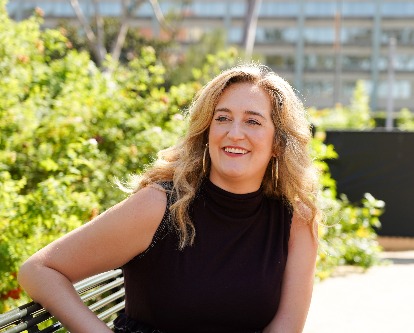
Ravi Iyer, managing director of the Neely Center for Ethical Leadership and Decision Making, recently joined a series of high-profile public forums examining the regulating of digital platforms, social media, and device use among children and adolescents.
On August 17, he made a video appearance at President Claudia Sheinbaum’s nationally televised morning conference, where he was introduced by Education Secretary Mario Delgado. A week later, on August 24, he joined the regional forum La vida frente a la pantalla at UANL in Nuevo León, inaugurated by Nuevo León Governor Samuel García and Education Secretary Mario Delgado.
“Mexico’s president is a scientist who is convening experts weekly to help start a national conversation on technology’s role in society, especially with respect to kids,” Iyer explained. “She is responding to parents who are eager for help as they see the hold that technology platforms have on their kids. Informing this national conversation will both help those parents manage technology in their families as well as provide ideas for policies to give parents the help they deserve.”
In his appearance, Ravi addressed Silicon Valley’s argument that platforms simply “give people what they want.” As a psychologist, he drew a line between short-term wants — the doughnut, the next scroll — and longer-term aspirations such as healthier eating or spending time outdoors with your kids.
“Technology companies optimize products for short-term attention, rather than asking us about our longer-term preferences,” Iyer explained. “As a result, kids themselves often say that they spend too much time on social media and that that gets in the way of their sleep and their grades. And many report seeing sexual or graphic content that they don't want to see.”
According to Iyer, today’s ranking systems optimize for engagement, but they could just as easily optimize for healthier goals. That choice, he argued, has three consequences for young people: unwanted and excessive phone and social media use, unsolicited contact, and unsolicited content.
Ravi presented evidence regarding the benefits of full-day bans on cellphone use in classrooms, citing experiences in the Netherlands, New York, Florida, and Arkansas. These regions reported improvements in areas including concentration, behavior, school climate, absenteeism, and discipline.
Iyer also pointed to Pew Research Center data, Meta’s own research from the New Mexico litigation, and Australia’s eSafety survey as evidence that design features can be changed to create a safer digital environment for children and adolescents. Iyer noted that in Australia, in particular, 30% of kids in Australia are estimated to be off these products and many parents are reporting benefits, such as increased in-person social interactions.
“We are also seeing improvements in terms of developing privacy preserving age assurance technologies, such that what is normative for today’s 15 year-olds will likely be very different in five years,” Iyer said. “Kids will hopefully no longer feel that they need to be on social media in order to not feel left out.”
Iyer underscored that it’s not “anti-technology” to want products to help people meet their aspirations rather than hinder them, especially where children are concerned. In actuality, bans on excessive use may support a healthier technology industry in the long-term.