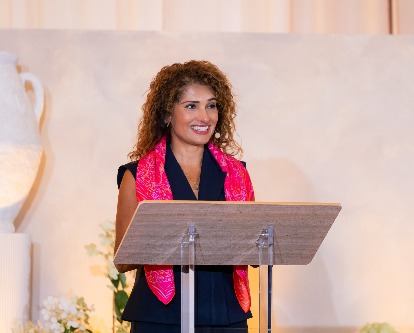
Hoag Foundation President Caroline Pereira on Philanthropy, Executive Leadership, and Purpose-Driven Work
As president of the Hoag Hospital Foundation, Caroline Pereira EMBA ’17 is working to get care to thousands of California patients.
Advisory Council Member Spotlight: Brian Davidian
A wide-ranging conversation with Brian Davidian, an Arkley Council member, USC alumnus, and president of RT Specialty.
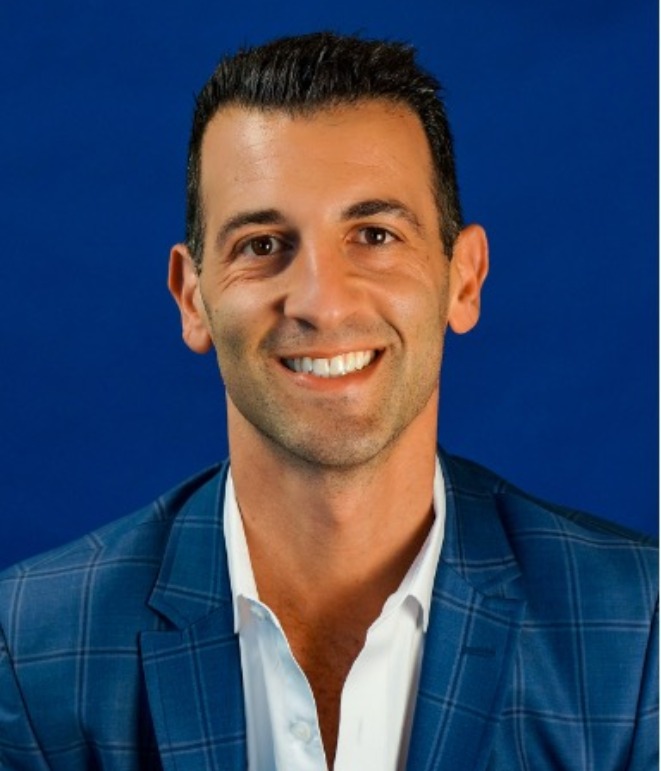
Brian Davidian '05, president of RT Specialty and Arkley Advisory Council Member.
[Photo courtesy of Davidian]
Brian Davidian ’05, president of RT Specialty, believes attending USC set him up for long-term success. From the world-class faculty to the Trojan Family, Davidian has experienced the benefits of being a Trojan throughout his over twenty-year career in wholesale broking.
Now, Davidian, an Arkley Institute for Risk Management Advisory Council member, is looking back on his time at USC, the mentorship that guided him to success, and what he would do differently if he could return to school. He’s also looking forward at the future of risk management and how artificial intelligence may impact the field.
Interviewer: How were you first introduced to the risk management and insurance industry?
Brian Davidian: As I entered my senior year at USC, I started to really think about what sort of career path I wanted to pursue that fit my skill set, and I actually ended up picking commercial real estate. I got hired as an intern for the fall and was all set to join a firm at graduation until I realized that they didn’t pay salaries, only commission, and I didn’t have any money or prospects to kick off my new career.
So, I had to pivot. My dad was in retail insurance for over 30 years, and he suggested that I talk to a friend of his, Chris Houska, who was the CEO of a small wholesale brokerage called Sterling West Insurance at the time (2005). When I met with Chris, he told me about what wholesale is, what his group did, and introduced me to a few different brokers in their office. I left the office that day with an offer from a broker to join as a technical assistant starting at the bottom, and 21 years later, I’m still doing the same thing.
What has contributed most significantly to your personal success in the industry?
BD: In the beginning part of my career, having a mentor, being coachable, and making the effort to absorb and retain information were crucial to my early development. I was never someone who waited around to be told what to do. I was active in my pursuit to gain more knowledge and to get better every day no matter what the task was. I was blessed to have worked for a very strong casualty broker right out of the gate, so I quickly absorbed complex technical aspects of coverage and placement and gained invaluable carrier and retailer exposure as well.
In the next stage of my career, I found that asking questions, listening to the answers, and adjusting the way I operate were crucial to success — very simple things such as asking the carriers what kind of deals they want to see, what gets my submission to the top of the stack, what kind of authority do they have that would allow me to become more efficient with my time. At the retail level, I’d ask each person what things I can do better, what things do you like about your preferred wholesalers, what things do you dislike. Just hearing the answers allowed me to adjust the way I operated to fit their individual needs.
In my current stage and probably most importantly overall has been my ability to problem solve. Problem solving is what differentiates an average broker from a successful one in my opinion. Being able to identify the problem, knowing the steps needed to solve it, and then executing at a rapid pace are my greatest strengths and have led me to where I am today.
The famous ‘Fight On’ was ingrained in me and gave me a passion and a desire to achieve success both personally and professionally.
— Brian Davidian
President, RT Speciality / Arkley Advisory Council Member
You are a USC alumnus and with your wife have given a significant scholarship for risk management students. How do you believe your USC education and experience have helped you in your career?
BD: Having gone to USC is like a cheat code in my opinion. Once you’re there, you’re immediately surrounded by extremely smart and capable peers, teachers who are some of the best and brightest in their fields, and a campus culture that drives you to be successful. It gave me a sense of what life was like in the “real world” where you have to learn to operate and manage on your own, critically think, and work hard and fight for what you want. The infamous “Fight On” was ingrained in me and gave me a passion and a desire to achieve success both personally and professionally. Building those character traits was key to helping me in my career, and it stays with me today.
What do you now wish you had taken more advantage of while you were at USC?
BD: To be fair, I did have an amazing college experience and the campus has changed so much in the last 20-plus years. I think if anything I wish I had done a study abroad program in Europe. If I could do it over again, I would have loved to have the experience of living in another country, working there, traveling, and learning more about another culture. I was born and raised in Los Angeles, went to school in Los Angeles, and started my insurance career right away after graduating. I have never lived in another city so I think that if I could do it over, I would have taken advantage of a study abroad program.
You have been working in wholesale broking for over 20 years. What is the most significant change you have seen in the surplus lines industry?
BD: I’d say the role of an excess and surplus broker is the most significant change I’ve seen in my 20+ years. It used to be we were looked at as just an “access point” or gateway to insurance carriers that the retailers couldn’t get to. They didn’t think highly of us for our expertise or knowledge and in many ways didn’t find a whole lot of value in what we did. I think that narrative has changed significantly today, and most retailers would agree that specialized E&S brokers can add tremendous value to their roles with our specialist knowledge and technical abilities whether it be in liability, cyber, E&O, property, etc. The role of the wholesaler has changed from access point to partner in many ways.
How are you seeing artificial intelligence impact your day-to-day role?
BD: Right now, the jury is out but I’ll outline both a positive and a negative impact AI is having.
A positive impact AI is having is within my own team, our staff is using it where possible to improve efficiency in processing and data analyzation-based tasks. It has helped tremendously with certain processing tasks, administrative functions, and spreadsheet building and analysis. Comparing quotes and policies used to take 20+ minutes and now is taking less than five. It’s improved many of the operational efficiencies by cutting down on lengthy administrative and processing tasks.
A negative impact is the assumption that AI is going to start replacing underwriters and brokers along with other critical human functioning roles within the industry. There was an article that claimed ChatGPT was going to start underwriting and quoting certain lines of coverage, and overnight, the publicly traded stocks of major insurance companies and brokers took a nosedive. There are retailers and wholesalers popping up claiming that AI can save clients tons of money and make their insurance purchasing process more efficient and less costly by cutting out certain key human elements. That may be true for commoditized insurance products or ones where humans don’t need to assess risk, but in my line of specialty, which is liability, everything is subjective.
Whether someone should be liable and how much is the bodily injury or property damage worth is so subjective you almost never get two people to agree on those answers. In my experience, the data is just one part of the equation. The story behind the data, the one the broker is telling to the underwriter, is not something that AI can replicate in my opinion.
What is a fun fact about yourself?
BD: When I was at USC, my fraternity won the first and only Kappa Kappa Gamma charity football tournament hosted by Pete Carroll. His daughter was in Kappa, and they had a charity tournament to raise money and my fraternity (PIKE) won the whole thing. We got an autographed helmet with Pete Carroll and a team photo. They never did that event again, so it was a 1 of 1. A current fun fact is that I have four children, two boys and two girls ages 5 to 12. I love to bring them to USC football games and hope one day they all attend USC themselves!
RELATED
Hoag Foundation President Caroline Pereira on Philanthropy, Executive Leadership, and Purpose-Driven Work
As president of the Hoag Hospital Foundation, Caroline Pereira EMBA ’17 is working to get care to thousands of California patients.
Marshall Faculty Publications, Awards, and Honors: September 2026
We are proud to highlight the many accomplishments of Marshall’s exceptional faculty recognized for recently accepted and published research and achievements in their field.
A Week in the Life of a Marshall MBA Student
From class to tailgating, second-year MBA student Maddie Gissler describes her typical week at the USC Marshall School of Business
What Makes a Product ‘Cool’?
Research from USC Marshall decodes how a product becomes “cool” — and why the qualities that work in Ohio may flop in Shanghai.
Trojan Family at Work: How One MBA Student Turned a Career Setback into a New Opportunity
Just before graduation Hannah Foley MBA ’25 learned her full-time offer had been delayed. As she considered her next move, the Trojan Family helped open the door to a new opportunity.